Showing posts with label paris. Show all posts

Thursday, 12 June 2014

Paris IV

Eccentric Collette to the art of Dries Van Noten’s Inspirations to drinks at Rosa Sur Seine to sushi at Nanashi 


We began an eccentric afternoon in Paris by dashing to Le Musee des Arts Decoratifs to indulge in their ‘introspective’ (rather than retrospective) of the quirky Belgian fashion designer Dries Van Noten. His eponymous brand is a point of infatuation worldwide as a result of his vibrant colour palettes, dynamic textures and unusual tailoring - which eventually led to suffering when nihilistic fashion came to power in the noughts. 


As we enter the exhibition we’re reminded that the focus is the polychromatic journey from his initial flash of inspiration to the final garment being wrapped up in ribbon. This inspiration takes the form of a diverse range of themes from enchanted gardens to the opulence of Rajasthan’s fabrics or even London’s punk scene and oriental pattern.


Van Noten simultaneously celebrates all mediums of art with his juxtaposition of album covers, films, vintage fashion and even Renaissance art alongside his creations. For example, he combines Yves Klein sculptural nude Venus Bleu with a waist-defining dress from their women’s collection 2010/11 and then further develops by citing a field of bluebells as his key influence. He also subtly draws from anthropology themes such as the effects of subverting normal social behaviour, the perculiar sensuality of the androgyny in his unisex dinner jackets and the role of class differences as demonstrated within his tendency to mix opulent, traditional fashion of the aristocracy with funky street fashion of contemporary youth culture.


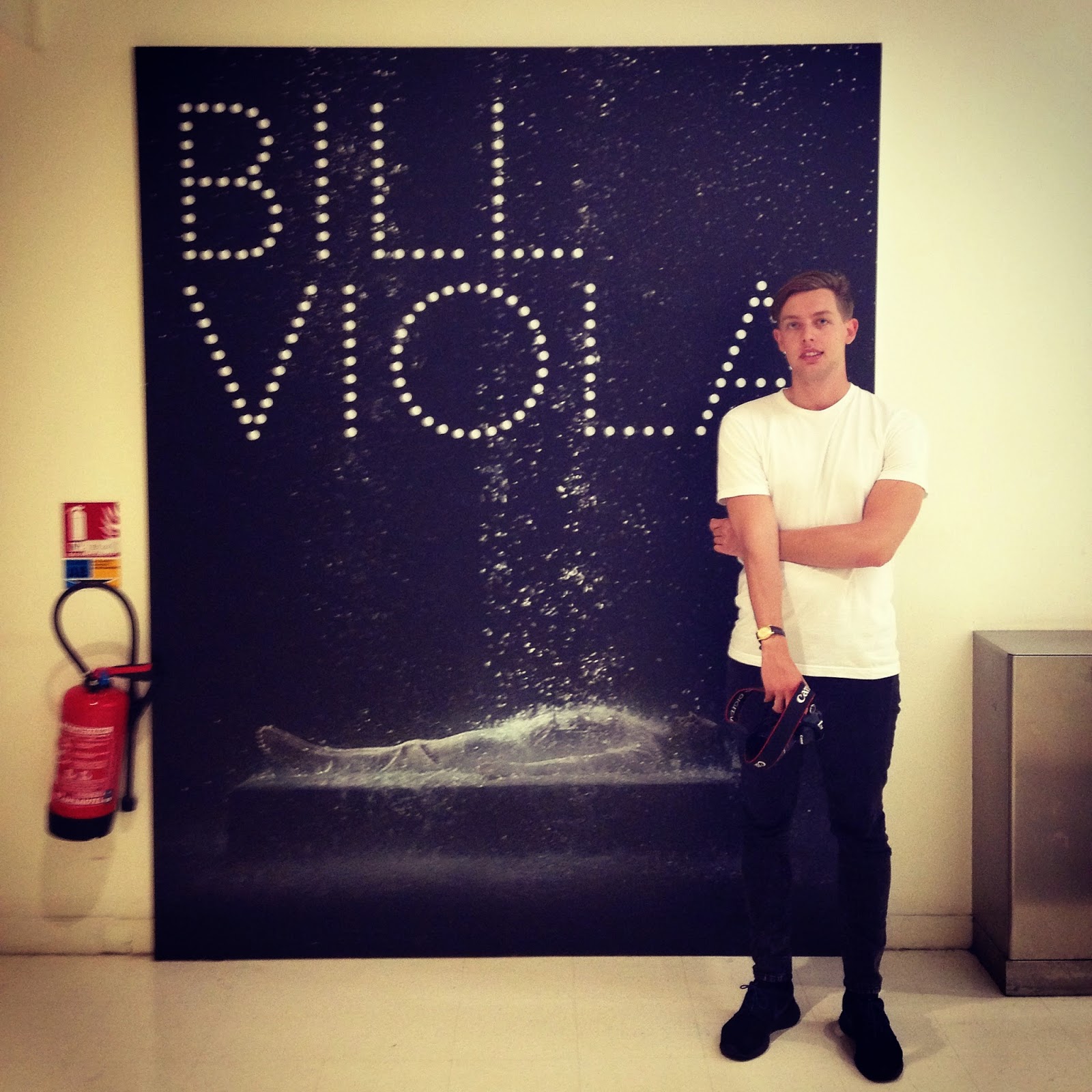
As with the video artist Bill Viola's retrospective that I just reviewed at Grand Palais, Van Notem makes consistent use of film. Be it in his slow motion scene of a running model with her clothes falling away or my highlight of the entire exhibition - the absolutely sublime, enthralling, bewitching,  mesmerising video by Hubret Duprat -  l’education des trichopetres 1998 - of a hermit crab using his burrowing skills to create a piece of jewelry from gold leaf, pearl and turquoise.


As delightfully quirky as this exhibition may be, there is a sadly an underlying lack of emotional force or provocation behind what should be an utterly captivating look into the mind of an inspiring fashion designer. Unfortunately, in terms of curating, the clothes protected by glass combined with the rather ominous silence and miniscule video screens make the experience feel more like visiting Madame Tussands than a much anticipated ‘introspective’. However, please note that these are trivial issues, which don’t change the quality of the work or the fascinating philosophies behind his design process, which make it worth a visit.

Which led to a browse in hipsterland ...


I am willing to accept that if you don't have a taste for swirls of gold and floral prints and fear you'll find the whole explosion mind-numbingly confusing, the eclectic concept shop Collette, 212 Rue St Honore is seconds away. 


This is the temple of hipster-culture where you will be able to indulge in a better-organised, somewhat groovier blend of controversial art literature, lust-worthy high fashion, pristine records and Le maquillage galore in a nook overflowing with an eccentric mix of tailor-made scents and endless pots of neon glitter. The shop's walls are adorned with thought-provoking material to ponder. 


The crowd are unsurprisingly the young, beautiful and alternative Parisians and yes, the staff could be the cast of the next Victoria Secret fashion show. Although I must add that their facial expressions are so habitually sullen that it makes you feel as if you’ve walked into a wedding in latex.

Which led us to drinks…


After a little more culture vulture prowling, the heavenly warm weather led us to Rosa Bonheur sur Seine, 37 quay d'Orsay. On the surface it is just another shabby-chic hotspot to meet for an presswork apero, but in fact it so much more. When you’ve bought your plastic cup of oh-so-surprisingly delicious rose, you select your perch at one of the battered, but buzzing communal picnic tables. 


You only have to have a quick glance over your shoulder to feel dwarfed by the magnificent Pont Alexander III Bridge and the untainted beauty of the river Seine in the evening sun. The juxtaposition of this tattered little collection of tables and the opulent architecture of this famously affluent quartier is definitely worth the horrors of the portaloo (skip to Musee D’Orsay instead).

Which led us to dinner…


I was recently reminded that in Paris the distance of a few metres can make a monumental difference in the atmosphere of the neighbourhood and this certainly applies to Nanashi, 31 Rue Paradis, which truly is a diamond in the rough. Despite the potential sketchiness of the surrounding streets the bohemian haunt (also found in the snazzier Le Marais) is renowned for its delicious Japanese and Vegetarian food as well as the quirky interior design. The walls are lines with fresh produce, the colourful tables are adorned with wildflowers, heady candles and certainly wouldn’t go amiss in a Cuban canteen. 


We shared a feast of absolutely fabulous salmon chirashi, miso soup, beetroot & aubergine salad, spring rolls and I was even allowed to nip across the road to buy a cheeky avocado. The best part was that our dinner was guilt-free, because unlike the hipster sushi spots you’ll stumble on in Le Marais, this mountain of food was completely affordable. After a long day of nattering in French on the shop floor, the delightful staff were more than happy to indulge us in a little ‘franglish’, which is always necessary when the suggestion of an Asian menu is faintly scrawled across a tattered black board. By far the most brilliant part of the whole experience was the fact that they don’t fill their shakers with salt, but with seeds - the exquisite pockets of nutrition that I am forever denied by the extortionate supermarket pricing.


Monday, 9 June 2014

Paris III


 Contemporary Art
at the Grand Palais, Paris

Monumenta: Ilya and Emilia Kabakov 
10th May – 22nd June 2014


Tourist crowds on a Saturday morning may seem like a reckless choice, but after a stodgy brunch at the uber-cool, yet deeply unfriendly Holy Belly in the 10th, we ventured over there early to catch the biennial Monumenta commission and it seemed it had rather fallen under the radar. The first point to note is that one must enter the alarmingly vast exhibition space with an open mind, because you will most likely leave totally and utterly dazed and confused. 


The brainchild of Russian artists Ilya and Emilia Kabakov, this metaphysical experience leaves you utterly spellbound. They present the concept of a utopian village, called ‘L’étrange cite’ beneath Europe’s biggest Belle Époque domed roof. It consists of a disorientating labyrinth of temples, chapels, and archways, nestled within a maze of blindingly white domes.


 Of the somewhat disorientating selection, we were captivated by a few spaces in particular.  ‘Le centre de l’energie cosmique’ was an ancient civilisation presented in the form of a silvery scientific city, which then leads you into ‘Manas’. This space presents a two tier Tibetan outpost, with an earthly, but also celestial level, which inhabitants use to seek spiritual development. ‘La chappelle blanche’ followed Malevich’s “white on white” dream of infinity as well as the fact as referencing the fragmentation of the art of antiquity in places of worship. 


The piece blends idyllic imitations of Impressionist outdoor scenes with mock Soviet realism in the form of cheerful workers in a faded palette juxtaposed with a splash of blood. This chapel has the power to shock, but simultaneously gives you food for thought. 


What makes this exhibition so stirring is the perplexing layout, which lets you transcend conventional curating and appreciate this dreamscape on another level, be it through photography or personal experience. I would highly recommend going, but ensure that you read all of the corresponding leaflets and blurbs if you want to have a chance at understanding what lies ahead.

Bill Viola
5th March - 21st July 2014


Bill Viola’s brilliant and beautifully curated retrospective is laid across an infatuating labyrinth of dark rooms. The understated beauty of his slow moving, but somewhat addictive films lures us in. He is a contemporary American video artist, known for using innovative sound and imaging technology such as slow motion. He focuses on fundamental human experiences such as birth and death, transfiguration and consciousness and his trademarks are fire and water, which bring intense emotional experience into his work.


The exhibition begins with a projection of an ethereal man simultaneously drifting back and forth at various depths of field. He wanders a desolate dessert scene at night, which is reminiscent of the haunting Australian film Picnic at Hanging Rock (in which schoolgirls are seemingly lost to an alternative dimension). The diaphanous pyjamas worn by the subject and the close ups of the rippling linen were incredibly beautiful. As you watch the film you feel drawn in to the man’s journey, unable to abandon him in his hallucinations.


The other particularly captivating film was the encounter, in which two screens face each other at either end of the room and show two men in casual modern dress, juxtaposed with two women in traditional saris. The sound of the desert wind as they walk towards and away from each other during the film’s loop magnifies the evocative power of this film, which gives us a desperate sense of loss, when the subjects eventually leave the screen as we are excluded from their journey.


In The Dreamers, there is a sense of calm which floods you as you watch these people submerged in water as their hair and clothing moves with its energy. This theme of the force of water is also visible as it bursts through a suburban house in the Going forth by day: the deluge, which is shown in a large dark space, where the audience lie sprawled on the floor to watch the events of four simultaneous films unfold. As you descend the stairs towards the final pieces, you unknowingly enter another work titled ‘Presence’, which consists of spooky whispers that leave you looking over your shoulder, as you are powerless to his element of surprise. 


The key film was the incredibly spiritual, Tristan’s Ascension, depicting a lifeless man lying still and gradually being drowned in cascading water before rising up through the incredible force of it – all without movement or reaction. Not unsurprisingly given the brevity of the piece, it was originally created to accompany Wagner’s opera Tristan und Isolde. It is enthralling, because of the paradox of the man’s stillness, with the unrivalled strength of the falling water, which seems to crush him before he is saved. I would definitely declare it to be one of the most moving films I have ever seen. The later, Going forth by day: the first light also carried the same reference to Jesus and the theme of being drawn to heaven.


The key film was the incredibly spiritual, Tristan’s Ascension, depicting a lifeless man lying still and gradually being drowned in cascading water before rising up through the incredible force of it – all without movement or reaction. Not unsurprisingly given the brevity of the piece, it was originally created to accompany Wagner’s opera Tristan und Isolde. It is enthralling, because of the paradox of the man’s stillness, with the unrivalled strength of the falling water, wn. The later, Going forth by day: the first light also carried the same reference to Jesus and the theme of being drawn to heaven.


As if sent by Bill Viola himself, last night we watched the monumental electrical storm unfold and these are a few of my more successful shots of the lightning to prey upon...


Friday, 6 June 2014

Paris II

An eclectic, Parisian Saturday
Slow Art, L’institut Suedois a Paris
Martial Raysse, Center Pompidou
Picnics by Canal St Martin, 10th.
Wanderlust, La cite de la mode et du design


Seeking a little cultural nourishment after a lazy brunch, we stumbled upon L’Institute Suedois (the Swedish Cultural Institute), 11 Rue Payenne, Le Marais., which is famous for its nihilistic café and rather magical gardens obscured by the palatial exterior. We were lured in by the intriguing title of the Slow Art Movement’s retrospective. The concept behind it is a total rejection of the contemporary reality that by mass producing art in the 21st century, the original emotional impact is lost – an idea originally pondered by the German aesthetics philosopher Immanuel Kant who believed that great art had to have a depth of soul beyond its aesthetic value.


These Swedish artists and craftspeople wish to counteract a world, which regretfully values innovation and speed above the past role of the craftsman as an artist who spent hours perfecting their work. The movement celebrates the meticulous creative process behind an object, by presenting textiles, glass, ceramics and silver, which have all been made by hand.  Upon entering, we were immediately drawn to what resembled a shadowy, monochrome photograph, but only to realise that it was in fact a work of embroidery, Shadows by Malin Lager (1946) who describes her needle like a paintbrush and her thread as the paint. A stirringly beautiful work sat next to it; Jane Reumert’s Snow Owl bowl, which could be confused for a collage of feathers, but is in fact finely worked, nearly transparent clay.


Our favourite piece in the first room was Helena Sandstrom’s eggshell necklace, which was almost ethereal in its delicacy. To continue with the exhibition you cross the courtyard, past an array of beautiful Nordic’s gathering to indulge on the café’s delicacies, but don’t be tempted to join them at the rickety tables, because there is a gorgeous little secret garden if you follow the staircase and aren’t afraid to push a few doors. Head to Marche des Enfants Rouges, 39 Rue de Bretagne for some lunch en route to the Pompidou or to gather ingredients for cooking in your tiny kitchen as we did.


Martial Raysse, Center Pompidou
14 May-22 September


Only streets away, the Pompidou Centre’s summer exhibition opens with a quote from Raysse, “Today’s art is a rocket in space. Prisunic supermarkets are the museums of Modern Art’, which defines the experience you will have. The provocative artist Martial Raysse was born to a family of ceramicists in 1936 and after becoming obsessed with the beauty of plastic as he worked amongst the New Realists of Nice, moved to New York to submerge himself in the Pop Art scene as illustrated by the electrifying explosion of colour in his work. 


The Pompidou brings together 200 paintings, sculptures, films, photographs and drawings, presenting the eclectic diversity of his work. As you stroll round the exhibition it is immediately obvious that what makes his work so intriguing is the juxtaposition of his neon celebration of consumer society - which could have been found in Warhol’s factory – with a string of innovative works in fluorescent paint, which seek to reflect the lessons of the Old Masters with their theories of perspective, allegorical systems and symbolism. 


Upon first entry you are confronted with a somewhat disheartening array of sculptures made from trash and the odd cliché neon sign, but when you move through past the ‘beach theatre’ and suddenly recognize the Italian Renaissance artist, Titian’s Venus of Urbino, it is somewhat endearing - even if she looks like she’s tumbled out of a rave on acid. 


What follows are various anonymous portraits of stereotyped women in bold, block colour, which I don’t doubt that the likes of Feminist Art Historian Griselda Pollock would jump at the chance to dissect. There are also many sober attempts at rather bland figurative drawing and sculpture, which would best be ignored. 


However, we were utterly bewitched by Raysse’s somewhat hypnotic and totally bizarre films. One depicted the intriguingly slow process of a well-dressed gentleman decapitating a beautiful flower, before stripping it off leaves and taking a hammer to the flowerpot. The possible meanings are endless and there is nothing like a good debate on the highs and lows of feminism to warm an afternoon. In short, I certainly wouldn’t travel to Paris to see Martial Raysse’s retrospective if you’re perfectly satisfied with the likes of Warhol, but it is certainly a fabulous use of an hour if you find yourself at a loss in the City of Lights.

Picnics by Canal St Martin, 10th.


The best way to end a day in Paris is to gather for a picnic and let it melt into a night of dancing. On my first night back in the city, we gathered on the banks of Canal St Martin, not far from the charming little studio i'm renting high up in the rafters of a building on the banks. 


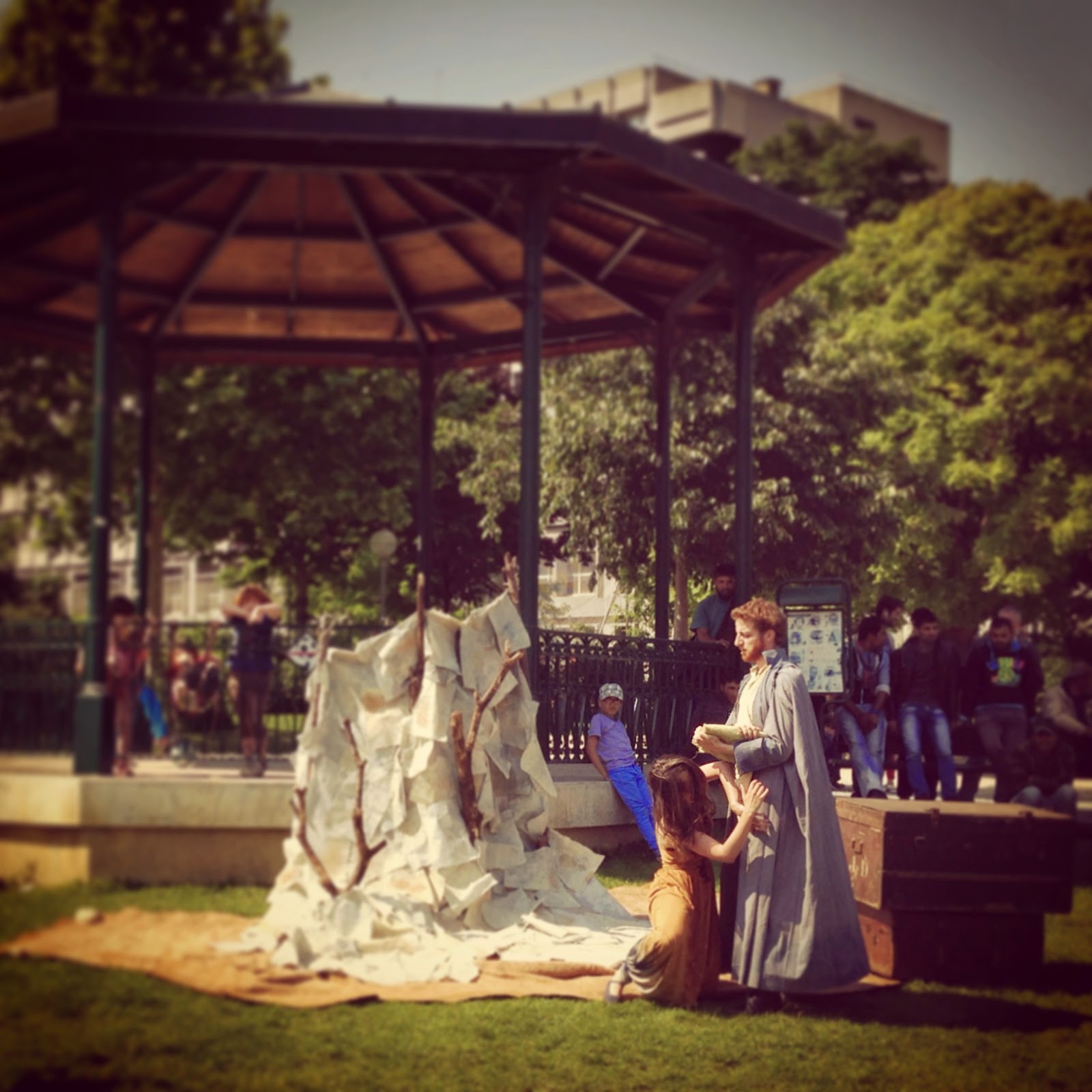
On the stroll down I passed this street artists collaborating on a captivating neon interpretation of  fast living and only minutes later paused to watch an enthralling performance of The Tempest in the park, with actors in full Shakespearean costume. 


The canal’s atmosphere is always chilled and intimate, with an eclectic mix of musicians and bohemian locals, but rarely any tourists. Some people will bring tables and chairs down from their apartment and eat on the street, but most will sit on the water. We had a lovely spot, perilously close to the edge, just in front of local haunt, Chez Prune.


 Lit only by the odd streetlight and the windows of surrounding apartments, we could barely see our spread of charcuterie, mozzarella and fabulous little cherry tomatoes. There are various supermarkets along the banks, where you can buy gorgeous wine for nothing, so we drank delicious rose and a little red to protect us from the breeze. But, if you’re feeling a little in need of something nutritious Sol Semilla, Rue de Vinaigries offers a delicious selection of superfood salads and even aphrodisiac guarana smoothies to take away.


Wanderlust, La cite de la mode et du design.
32 Quai d’Austerlitz


My favourite place to go dancing in Paris is the eclectic setting of Wanderlust or Nuba, 32 Quai d’Austerlitz, where you can dance, chill, eat, talk, drink, watch projected films or dangle your feet over the Seine and generally submerge yourself in Bourgeois-Boheme nightlife. The crowd are the alarmingly beautiful, funky, young set so the door policy is a little rigid, but if you’re wearing enough black and looking suitable sullen, you’ll have no problem.


 I am not normally a great lover of clubbing, but here I can dance until sunrise. Known for their DJs mixing the crème de la crème of ‘French touch’ electronic dance music like I: Cube, Etienne de Crecy and Para one, which all keep you on your toes. The joy of the variety is that you can dash between dance floors as your attention span wavers. The appeal of this 1,600 square metre outdoor terrace is the unique blend of funky techno music, art films projected on the walls and most importantly the space you have to just pull up a bunch of chairs and share a bottle of wine (and a somewhat extortionate pizza) whilst the Seine drifts by.


 But, if you need more choice, the uber-cool Nuba is just upstairs on the roof, where you’ll find a couple more diverse dance floors, both inside and out and more of an après-ski atmosphere, which even includes a chip van. If you only have one weekend in Paris, I would choose Nuba, because the slightly elevated, smaller rooftop setting makes it feel more intimate - it feels more like going to a friend's garden party where you're free to wander between the crowds.